When your business is the target of a break-in, it’s a major headache. Business operations are interrupted, insurance claims take time and premiums often rise.
Unfortunately, opportunistic break-ins and targeted theft are common risks, especially for retail premises, warehouses, offices and industrial buildings. In fact, in 2025, in the UK, there was a 50% increase in robberies of business property.
One of the most effective ways to protect your property is by installing anti-theft doors. These high-security doors are specifically designed to resist forced entry, making it far more difficult for intruders to gain access.
In this guide, we explain what anti-theft doors are, how they work and how to choose the right option for your building.
What are anti-theft doors?
Anti-theft doors are high-security doors designed to deter and prevent unauthorised entry. You may also hear them called burglar-proof doors, burglar-resistant doors or anti-burglar doors.
Unlike standard doors, anti-theft doors are built with reinforced materials and specialist locking systems that make forced entry much harder. These doors are designed to resist common attack methods, including prying, drilling, cutting or forcing the lock.
Many anti-burglary doors are also tested against recognised security standards, which measure how well they can resist different types of attack.
In short, a well-designed anti-theft door creates a strong physical barrier between your building and potential intruders.
How anti-theft doors prevent break-ins
A standard door may slow down an intruder for a few seconds. But it isn’t designed to resist a determined attack. Theft-proof doors, on the other hand, are engineered to withstand common burglary techniques.
Here’s how they do it.
- Reinforced materials. Many burglar-resistant doors are made from reinforced steel or heavy-duty composite materials. These materials are much harder to break, cut or force open compared to traditional timber doors.
- Stronger door frames. The frame is just as important as the door. Anti-theft doors use reinforced frames that prevent intruders from prying the door away from the wall.
- Multi-point locking systems. Most anti-burglar door designs include multi-point locking systems that secure the door at several points along the frame. This spreads the load and makes it much harder to force the door open.
- Security hinges. These are specialised hinges with a tamper-resistant design. Made from heavy-duty materials, they make it very difficult for intruders to gain access by cutting, prying or forcing your doors.
- High-security locks. Specially designed locks resist drilling, picking and other common attack methods.
Together, these features ensure that an anti-theft door provides a strong defence against attempted burglary.
Types of anti-theft doors
There are several types of anti-theft doors available. Let’s take a look.
Steel security doors
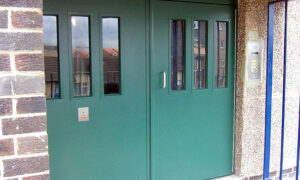
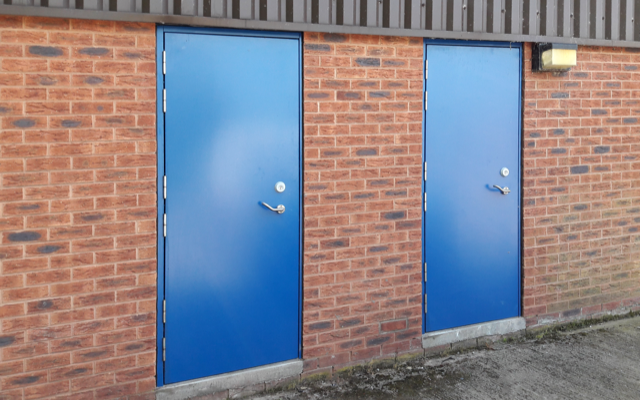
Steel doors are one of the most common types of anti-theft doors for commercial, industrial and public buildings. They offer excellent durability and resistance to forced entry and are widely used for warehouses, service entrances, plant rooms and storage areas.
Secure fire exit doors
You can get fire exit doors with advanced security features. These doors prevent unauthorised access from outside the building — while allowing a quick and easy exit from inside the building during an emergency.
Security-rated doors
Some anti-theft doors are independently tested to recognised security standards. These security-rated doors are designed to resist specific types of forced entry using defined tools and attack methods — and they come with certification.
Secure fire-rated doors
In many buildings, doors need to provide both fire protection and security. Security fire doors combine fire resistance with anti-theft features. The door’s FD-rating (for example FD30 or FD60) shows how long it can withstand flames and smoke.
Secure roller shutters (and other defences)
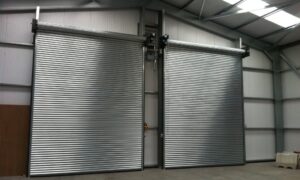
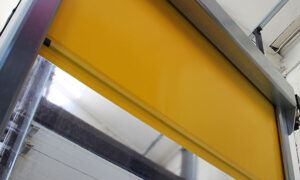
Roller shutters provide another secure barrier against break-ins. Security shutters for shops and industrial businesses often feature reinforced steel or aluminium laths and anti-lift technology. You can also use security grilles across doors and windows to provide additional protection for entrances and shop fronts.
What security rating should an anti-theft door have?
Security-rated doors are designed and tested to resist forced entry, giving you confidence that your building and assets are properly protected.
In the UK, there are several key standards to look for when choosing an anti-theft door.
LPS 1175
This is one of the most widely recognised standards for high-security doors. LPS 1175 doors are tested against different attack levels. They’re classified from SR1 to SR8, with higher ratings offering greater protection. These doors are ideal for commercial, industrial or high-risk locations.
PAS 24
PAS 24 is a UK standard for enhanced security, commonly applied to residential and lower-risk commercial doors. It focuses on everyday burglary attempts, ensuring doors resist opportunistic attacks using common hand tools.
Secured by Design (SBD)
SBD is a police-backed certification scheme that recognises products meeting crime-prevention standards. Doors carrying the SBD mark have been independently tested (often referencing PAS 24) and are recommended for projects where crime reduction is a priority.
By considering LPS 1175, PAS 24 and SBD, you can select a door that fits both your risk profile and regulatory requirements.
Choosing the right anti-theft door for your building
Not every building requires the same level of protection. Choosing the right anti-theft door depends on several factors:
Location and crime risk. Buildings located in high-crime areas or isolated locations may require stronger security measures.
Type of building. Different building types have different security needs. For example, a warehouse entrance is likely to require a different solution than an office personnel door.
Insurance requirements. Many insurers require specific security measures to protect high-value assets. Installing security-rated anti-burglary doors can help meet insurer specifications.
Door size and configuration. Some buildings require bespoke doors due to a non-standard opening or operational requirements.
Choosing a door that matches your risk profile and insurance requirements ensures optimal protection without spending more than you have to.
High-security, anti-theft doors from Secure Door Systems
At Secure Door Systems, we design, manufacture and install high-performance security doors for commercial, industrial and public buildings in Greater Manchester and throughout the UK.
Our range of anti-theft products includes:
- Reinforced steel security doors
- Bespoke security doors
- LPS 1175 security-rated doors
- Secure roller shutters
- Security grilles and fencing
Every product we supply is built to provide reliable protection against forced entry, helping you safeguard your property, assets and staff — and keep your business running smoothly.
Our team can also assess your building and recommend the most suitable security doors for your premises. With professional installation and ongoing support, you can be confident that your security doors will perform exactly as intended.
If you’re looking for reliable anti-theft doors for your building, get in touch with Secure Door Systems today to discuss your requirements and get a quote.
Anti-theft doors: FAQs
What is an anti-theft door?
An anti-theft door is a reinforced security door designed to resist forced entry. These doors are built using strong materials, reinforced frames and high-security locking systems.
Do security doors deter burglars?
Yes. Visible, well-installed security doors act as a strong deterrent. Criminals are more likely to target properties that are easier to access. So a high-quality anti-theft door can reduce the likelihood of break-ins.
Can security doors be broken into?
While no door is completely “burglar-proof”, security-rated doors significantly increase the time and effort required to gain entry. Doors tested with higher LPS 1175 ratings are proven to withstand attacks using power tools, making forced entry extremely difficult.
How much do anti-theft doors cost?
Costs vary depending on the material, security rating and size of the door. Custom sizes, finishes and additional security features can also affect the price.
What is the best lock for an anti-theft door?
The best anti-theft door locks are multi-point locking systems or high-security mortise locks tested to relevant standards. These locks work in combination with the door’s reinforced frame to provide maximum resistance against forced entry.